
What to Expect During a 200-Hour Yoga Teacher Training in Bali
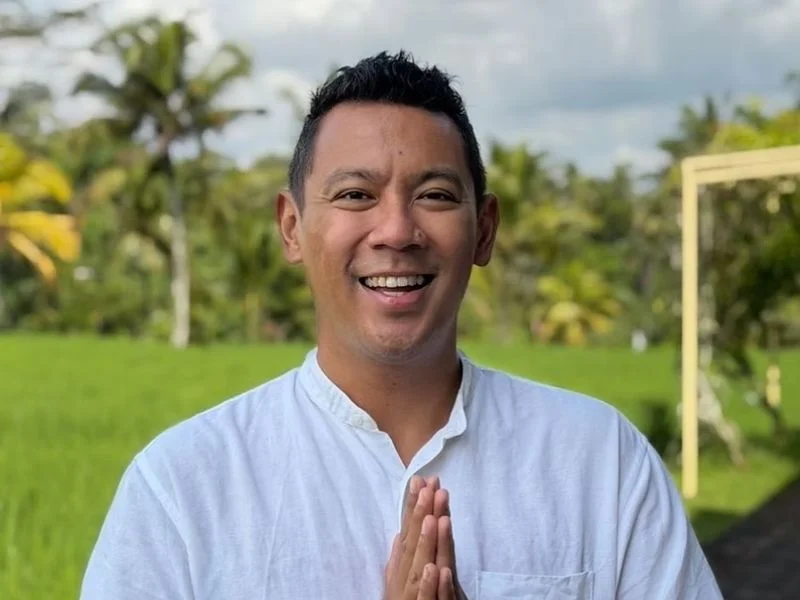
A Yoga Teacher Training in Bali can look peaceful in photographs. The reality includes beautiful mornings and meaningful connections, but it also includes long study days, unfamiliar material, teaching nerves, and the need to manage your energy.
As School Director, I speak with students before they arrive and watch the questions change once training begins. Before the course, people usually ask about flexibility, certification, and accommodation. During the course, they begin asking how to remember a sequence, how to teach safely, and how to absorb so much information in three weeks.
Knowing what to expect helps you arrive prepared without trying to control every part of the experience.

1. Your Days Will Be Structured
An intensive 200-hour yoga teacher training in Bali program usually follows a full schedule. Morning practice may begin early, followed by meals, lectures, workshops, group work, assignments, and teaching practice.
The exact timetable varies, but this is not a retreat with one class and the rest of the day free. Protect your sleep, arrive with realistic expectations, and avoid filling every break with sightseeing.
2. You Will Study More Than Asana
A complete foundational curriculum includes physical practice, anatomy and physiology, philosophy, pranayama, meditation, teaching methodology, sequencing, professional responsibilities, and practicum.
Some subjects may feel immediately familiar; others may challenge how you understand yoga. Give equal attention to the areas that are less visible on social media. They often matter most when you begin teaching.
See the curriculum guide What Should You Really Learn in a 200-Hour Yoga Teacher Training
3. You Will Teach Before You Feel Ready
Most students hope confidence will arrive before their first teaching exercise. Usually it grows because of the exercise. You may start by guiding one pose, then a short sequence, and eventually a fuller class.
A supportive training gives you clear tasks, observation, feedback, and another opportunity to try. Expect some discomfort. It is a normal part of turning knowledge into skill.
Practical guide How to Build Confidence Teaching Your First Yoga Class
4. Your Body and Energy Will Need Care
Daily movement can be demanding, especially when combined with long periods of concentration. More practice is not always better. Rest, hydration, food, and honest communication about pain or fatigue are part of responsible training.
A good program should offer modifications and encourage students to distinguish productive effort from warning signs. You do not earn a certificate by ignoring your body.
5. Community Becomes Part of the Education
You will study with people who have different bodies, cultures, experience levels, and reasons for joining. Group work can be supportive and occasionally challenging.
Learning to listen, give feedback, share space, and respect different perspectives is relevant to teaching. A yoga class is also a room full of people who will not experience every instruction in the same way.
6. Bali Will Be Present Without Being the Whole Course
Bali's culture and natural environment can add depth to the experience, especially when activities are offered respectfully and explained well. At the same time, the main reason you are there is to study.
Choose a location that makes rest and concentration possible. A peaceful setting outside the busiest streets may support the course better than being close to every attraction.
Compare locations Ubud vs Canggu vs Uluwatu for Yoga Teacher Training
7. Graduation Is a Beginning
Completing 200 hours gives you a foundation. It does not remove the need for continued practice, observation, mentoring, and experience.
Some graduates teach immediately. Others take time to integrate what they learned. Both paths can be responsible if you remain honest about your competence and keep studying.
Final Thoughts
Expect a serious learning experience inside a supportive environment. You will probably feel inspired, tired, uncertain, connected, and proud at different points in the same week.
The most useful preparation is not mastering advanced poses. Arrive ready to participate, ask questions, rest when needed, and practice teaching before you feel completely comfortable.
Check program details Explore the Bali Yoga Hub 200-Hour Training
Questions before booking Read the Bali Yoga Hub FAQs
Frequently Asked Questions
How long does a 200-hour Yoga Teacher Training in Bali take?
Intensive programs commonly run for about three to four weeks. Bali Yoga Hub's program is an immersive three-week course.
Do I need to be an advanced practitioner?
No. A steady interest in yoga, willingness to learn, and commitment to the schedule matter more than advanced poses.
Will I have free time during training?
Most programs include breaks and days off, but the schedule is full. Use free time for rest first, then plan modest activities around your energy.
Is accommodation normally included?
Many residential programs include accommodation, but not all do. Confirm the number of nights, room type, meals, and whether the room is at the training venue.


Comments