
Yoga Teacher Training in India vs Bali: What's the Real Difference?
If you're researching Yoga Teacher Training, you've probably noticed that two destinations appear again and again: India and Bali.
Both have become popular destinations for people who want to study yoga.
But they are very different places, and the experience of training in each can feel very different too.
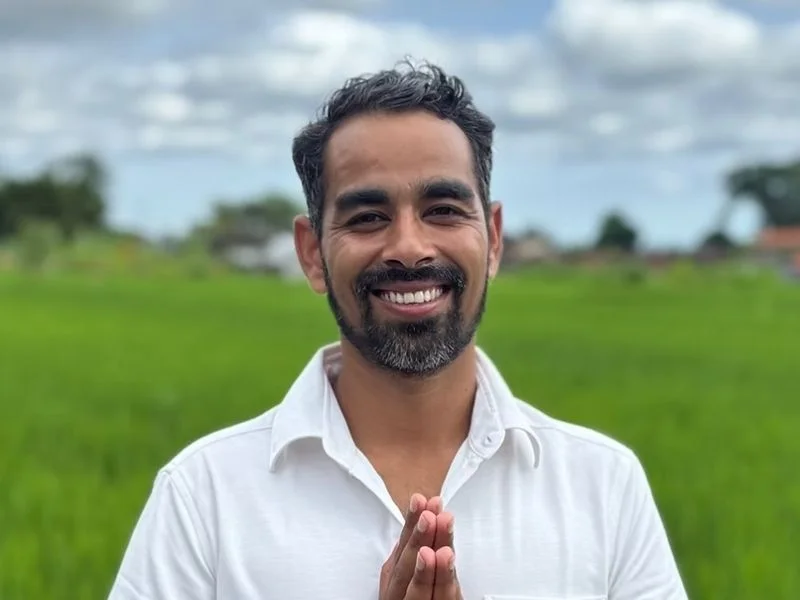
As someone who grew up in India and now teaches yoga in Bali, I've experienced both sides of this conversation.
And I don't think one destination is simply "better" than the other.
The better question is:
Which environment is right for the kind of experience you want?

1. India Has the Historical Connection to Yoga
India is where many of the traditions, philosophies, and texts that form the foundation of yoga developed.
For many students, that connection is a major reason to study there.
Being surrounded by Indian culture can make philosophical concepts feel less abstract.
You may encounter Sanskrit, traditional rituals, temples, ashrams, and different spiritual traditions as part of everyday life.
For someone who wants to explore yoga through its historical and cultural roots, India can be a deeply meaningful environment.
But studying in India doesn't automatically mean you'll receive a better education.
The quality of a Yoga Teacher Training still depends on the teachers, curriculum, teaching methodology, and learning environment.
2. Bali Offers a Different Kind of Yoga Experience
Bali doesn't have the same historical relationship with yoga that India does.
But Bali has developed into one of the world's most popular destinations for yoga, wellness, and personal development.
The environment is one of the reasons.
Rice fields, tropical landscapes, Balinese ceremonies, nature, and a strong wellness community create a very different atmosphere from a traditional Indian yoga setting.
For many international students, Bali provides an opportunity to step away from their normal routine and completely focus on learning.
The environment becomes part of the experience.
And for some students, that makes a significant difference.
3. The Learning Environment Matters
One of the biggest differences isn't actually about yoga.
It's about where and how you live while learning.
In India, you may choose an ashram, yoga school, retreat center, or residential academy.
The experience can range from very traditional and simple to modern and international.
In Bali, many Yoga Teacher Training programs are also residential, but the lifestyle can feel different.
Students may have access to nature, local culture, wellness activities, restaurants, cafes, beaches, and other experiences outside the training.
Neither approach is automatically better.
It depends on whether you want your training to feel more immersive and traditional or
more balanced with the wider experience of living in Bali.
If you're specifically considering different areas of Bali, our guide Ubud vs Canggu vs Uluwatu: Which Is Best for Yoga Teacher Training? looks at how the location can change the overall experience. Ubud vs Canggu vs Uluwatu: Which Is Best for Yoga Teacher Training?
4. Traditional Doesn't Always Mean Better
This is something I think students should understand before choosing a school.
A program can look very traditional.
It can use Sanskrit terminology, traditional clothing, ceremonies, ancient texts, and beautiful imagery.
But none of those things automatically make the teaching better.
The most important question is still:
Are you actually learning?
A good teacher should be able to explain the practice clearly, answer questions, observe students, and help them understand what they are doing.
Tradition is important.
But understanding is important too.
The best training environments are able to respect the roots of yoga while helping students understand how to practice and teach in the world they live in today.
5. The International Community in Bali
Another difference students often notice is the international nature of Bali.
People come to Bali from all over the world.
During a Yoga Teacher Training, you may spend three weeks practicing, studying, eating, and living alongside people from completely different countries and backgrounds.
That can become an important part of the education itself.
You learn how different people approach yoga.
You hear different perspectives.
You discover that people can have very different reasons for coming to teacher training.
Some want to become professional teachers.
Some want to deepen their personal practice.
Some are looking for a major change in their lives.
That diversity can make the learning environment very rich.
6. India Can Offer Deep Cultural Immersion
At the same time, India offers something that Bali cannot completely replicate.
The culture surrounding yoga is part of everyday life.
You can encounter temples, traditional ceremonies, spiritual teachers, Indian philosophy, Ayurveda, and many different approaches to yoga and spirituality.
For a student who wants to spend significant time exploring those traditions, India can provide an experience that goes beyond the classroom.
But again, this depends greatly on where you study.
India is a huge country.
A Yoga Teacher Training in Rishikesh can feel completely different from one in Goa, Kerala, Mysore, or another part of the country.
The same is true for Bali.
A training in Ubud can feel very different from one in Canggu or Uluwatu.
7. Bali Can Be Easier for Some International Students
For many international students, Bali is relatively easy to settle into.
There is a large international community, many people speak English, and wellness-focused businesses are everywhere.
That can make the transition into a three-week residential training more comfortable.
But comfort isn't necessarily the goal of teacher training.
Training should challenge you.
You should be physically challenged.
You should be mentally challenged.
You should be willing to question your understanding of yoga.
The important thing is having enough support around you to learn from those challenges.
8. What About the Yoga Itself?
This is where things become more complicated.
There isn't one single style of yoga taught in either India or Bali.
You can find Hatha, Vinyasa, Ashtanga, Yin, Kundalini, Iyengar, and many other approaches in both places.
So don't choose a destination based only on the country.
Choose the teacher and the school first.
Look at the actual curriculum.
Understand what styles are taught.
Read about the teachers.
Find out how much practice teaching is included.
Ask what the daily schedule looks like.
And understand how students are supported during the training.
If you're not sure what to look for when comparing schools, How to Choose a Yoga Teacher Training in Bali (Without Regretting It) covers some of the questions I recommend asking before making a decision. How to Choose a Yoga Teacher Training in Bali (Without Regretting It)
9. Don't Forget the Practical Side
There is also a practical difference between choosing India and Bali.
Think about:
Accommodation
Food
Transportation
Climate
Visa requirements
Training schedule
Group size
Teaching language
Cost
What is included in the program
These things may sound less important than yoga philosophy.
But you are going to spend several weeks living and learning in the environment you choose.
Your surroundings will affect your experience.
This is also why comparing only tuition fees can be misleading.
A cheaper program isn't necessarily cheaper once you add accommodation, food, transportation, and other daily expenses.
If you're comparing the financial side of Yoga Teacher Training in Bali, How Much Does Yoga Teacher Training in Bali Cost? explains what students should look at beyond the headline tuition number. How Much Does Yoga Teacher Training in Bali Cost?
10. So Which One Should You Choose?
If you want strong cultural immersion and a deeper connection with the historical roots of yoga, India may be the right choice for you.
If you want to combine serious yoga education with a tropical environment, international community, and a broader wellness experience, Bali may be the better fit.
But I would make one thing clear:
Don't choose India or Bali first. Choose the learning experience first.
Then choose the destination that supports that experience.
Look at the teachers.
Look at the curriculum.
Look at the class size.
Look at the amount of teaching practice.
Look at the accommodation.
Look at the daily schedule.
And think about the kind of person you want to become during those three weeks.
11. What I Would Tell Someone Choosing Between India and Bali
If someone asked me personally which destination they should choose, I wouldn't give them a simple answer.
I would ask them what they are looking for.
If your priority is being immersed in Indian culture and exploring the traditional roots of yoga, go to India.
If you want to study seriously while experiencing Bali's natural environment and international community, Bali can be an excellent choice.
And if you choose Bali, don't assume that being in Bali automatically means you're getting a meaningful yoga education.
The school still matters.
The teacher matters.
The curriculum matters.
Where you study is important. Who teaches you is even more important.
Final Thoughts
India and Bali can both offer powerful Yoga Teacher Training experiences.
They simply offer different environments.
India gives you the opportunity to experience yoga in the country where many of its traditions developed.
Bali offers a modern international yoga environment surrounded by nature, Balinese culture, and a strong global wellness community.
There is no universal answer.
The right destination is the one that supports the kind of learning experience you're looking for.
For me, yoga has always been bigger than a location.
The place can open the door.
But the teachers, the practice, and your willingness to learn are what make the journey meaningful.
Frequently Asked Questions
Is India or Bali better for Yoga Teacher Training?
Neither is automatically better. India offers a strong connection to the historical and cultural roots of yoga, while Bali offers an international learning environment surrounded by nature and Balinese culture. The quality of the school and teachers should be one of your biggest considerations.
Is Yoga Teacher Training in Bali authentic?
Bali has developed a large and diverse yoga community, with schools teaching many different traditions and styles. Authenticity depends more on the teachers, lineage, curriculum, and approach of the individual school than simply being located in Bali.
Is India better for learning traditional yoga?
India can provide a deeper cultural connection to the traditions and history of yoga. However, the actual experience depends on the school, teachers, location, and curriculum you choose.
Can beginners do Yoga Teacher Training in Bali?
Yes. Many 200-hour programs accept students with different levels of yoga experience. What matters is choosing a program whose teaching approach and physical requirements match your current level.
How do I choose between India and Bali?
Start by deciding what kind of experience you want. Consider the teaching style, curriculum, teachers, accommodation, group size, daily schedule, location, and overall environment before choosing your destination.
About the Author
ChetanYoga Teacher, Bali Yoga Hub
Chetan is an experienced yoga teacher from India who teaches at Bali Yoga Hub in Ubud, Bali. His teaching brings an understanding of traditional yoga together with a practical approach to helping international students develop their own practice and teaching skills.

Comments